
Mid-Century Modern – clean lines, warm colours, iconic design
What is Mid-Century Modern?
The term ‘Mid-Century Modern’ describes a design movement from the mid-20th century and can broadly be equated with the post-war period. In German usage, Mid-Century Modern is therefore also referred to as ‘post-war modernism’. At its height, the style influenced architecture, interior design, graphic design and product design, and was particularly prevalent in the USA, Canada, Australia and New Zealand.
Mid-Century Modern – Form follows function
Mid-Century Modern interior design and architecture reflect the optimism and enthusiasm for consumerism of the post-war American era. The economic boom led to a rise in demand for homes that were available quickly and were affordable for young families – preferably already fully furnished. Inexpensive mass-produced items were popular and were regarded as a contemporary interior design solution. Mid-Century Modern eschews elaborate ornamentation and frills – as its aesthetic was inspired, amongst other things, by the minimalist, Scandinavian interior design style. Generally speaking, Mid-Century Modern is guided by the design principle of ‘form follows function’, which was coined by the American architect Louis Sullivan: the form and shape of objects should be derived from their function or purpose. Depending on how this approach is interpreted, either ornamentation is dispensed with entirely (for example, in the Bauhaus style) or ornamentation is present but is regarded as serving a purpose.
Characteristics and fundamentals of mid-century interior design
Although mid-century modern exudes understated elegance, there are certain elements that define this interior design style and make it instantly recognisable. These features are typical of mid-century modern.
Popular colours for Mid-Century Modern
The fundamental colour scheme for Mid-Century Modern is warm, inviting and nostalgic. It features both neutral earth tones and bold colours. There is a strong emphasis on combining these shades in a way that creates rich contrasts.
The following colour combinations are particularly popular:
- Blue & Yellow: This scheme makes use of strong contrasts, but the effect can also be toned down by opting for lighter shades within the colour families.
- Olive green & yellow: For a natural, inviting look, combine a muted green with a sunny yellow.
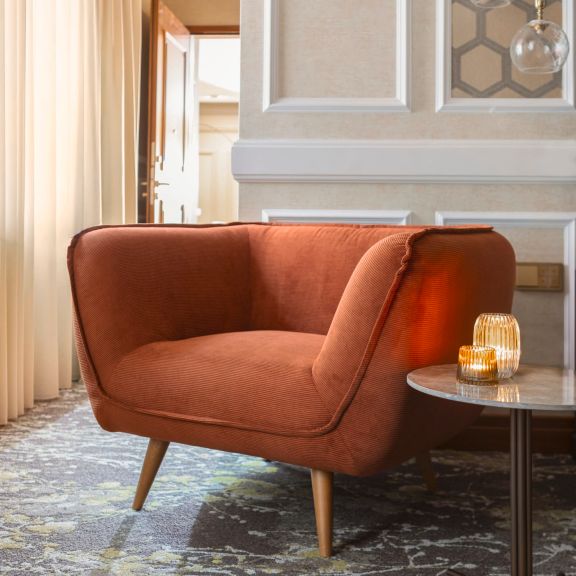
- Burnt orange or mustard yellow & shades of brown: The nostalgic colour combination from the 1960s and 1970s.
- Rich red & dark blue: This combination also creates strong contrasts and has a confident and headstrong effect.
Typical shapes and patterns in mid-century interior design
The shapes and patterns of the mid-century modern style are characterised by clean lines and organic curves. This creates striking contrasts that blend elegance with a touch of nostalgia, resulting in a cosy yet stylish interior. In Mid-Century interiors, patterns are frequently used in the form of wallpaper or wall art, as well as in patterned textiles such as throws or cushions. Geometric or organic shapes such as squares, rings, circles, semicircles, triangles, diamonds, paisley or wavy lines are particularly popular. These shapes are often combined with one another and used in a variety of colours. This results in repetitive, almost hypnotic designs, which later evolved into the psychedelic patterns of the 1970s.
Common materials in the Mid-Century Modern style
The materials used in Mid-Century Modern are dark, with a matt sheen, elegant and robust. Natural and classic materials such as wood, velvet and leather are combined with materials that were novel in interior design concepts in the mid-20th century: plastic, fibreglass, tubular steel, aluminium, chrome and plexiglass or acrylic. These materials were shaped by a forward-thinking mindset and the space race of the time, and still appear contemporary, surprising and unconventional today.
Mid-Century Modern: Furniture that embodies the style
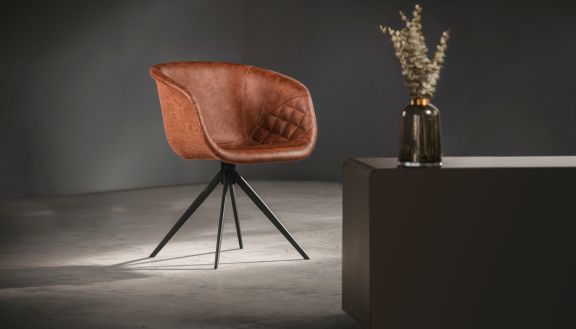
Mid-Century Modern encompasses not only architecture but also product and graphic design. The interior design is particularly recognisable, especially mid-century-style furniture. The pieces are streamlined and sleek with straight lines, and are characterised by their elegance and practicality. You won’t find any excessive ornamentation here.
Tables and chairs for Mid-Century interiors
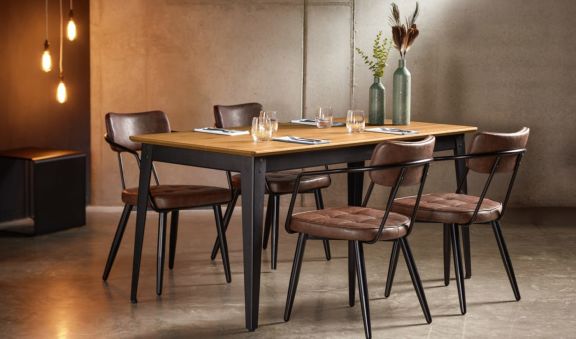
Mid-century-style tables and chairs can often be recognised by their legs: they are often tapered, meaning they become gradually narrower as they stretch towards the floor. So-called ‘hairpin legs’ are also a popular choice. These are slender furniture legs made from thin, curved metal rods, whose shape is reminiscent of hairpins. A classic example of a chair in the mid-century modern style is the Wishbone Chair by the Danish manufacturer Carl Hansen & Søn.

Mid-century style tables are usually made from woods such as teak, walnut, ash or oak – the real wood combines the elegance and functionality typical of Mid-Century Modern design. You can choose between light or dark woods and round or square table tops.
Mid-century style armchairs and sofas
A mid-century sofa or armchair impresses with its understated, deliberately simple and elegant appearance. Sofas are often close to the floor with a low backrest. Coloured upholstery in velvet or leather, in the typical colour palette of the era, is a popular choice. If the sofa has legs, these are made of wood and feature the characteristic conical shape. Here, too, one finds organic shapes and subtle curves – inspired by mid-century icons such as Arne Jacobsen’s Egg Chair or Eero Saarinen’s Tulip Chair. Overall, mid-century upholstered furniture appears rather delicate and not overly bulky.
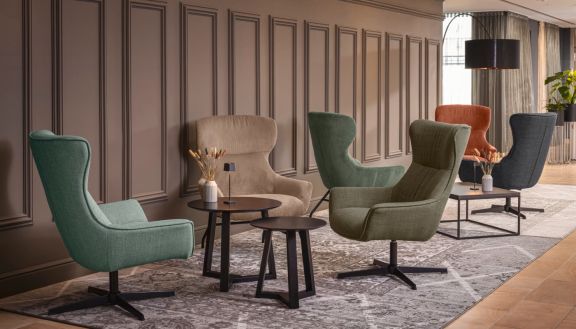
Matching cushions for mid-century armchairs, sofas and chairs
To make your seating even cosier, use matching seat cushions. Choose cushions in colours that either match or contrast with your mid-century modern furniture – take inspiration from the colour suggestions above. Alternatively, use the cushions to jazz up your existing furniture and give it a mid-century look.
Decorations for the Mid-Century Modern interior style
You can add the finishing touches to your Mid-Century interior with carefully selected decorative items. When choosing accessories, opt for typical Mid-Century colours such as orange, blue, yellow, red or brown, as well as geometric patterns and delicate, minimalist designs.
Unique lamps with a retro look
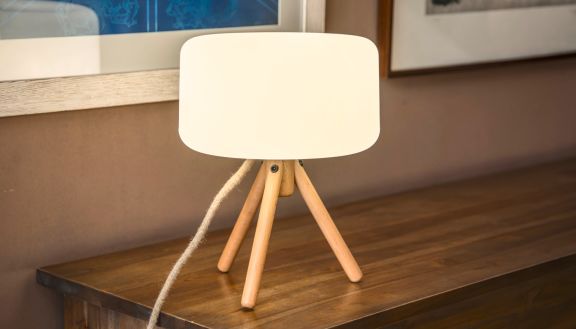
Whether it’s a floor lamp, ceiling light or table lamp – these decorative elements are not only practical, but are also perfect for adding mid-century style accents to your interior design, whether in a hotel, restaurant or private home. The lamps are unpretentious, functional and yet stylish. This is thanks to their colourful lampshades and the organic, slender shapes typical of Mid-Century Modern design.
Candle holders with character
If you’re aiming for a mid-century look with your interior design, you can get creative with your candle holders too. Instead of the classic lantern or a traditional metal candlestick, opt for bulbous designs in bright colours and with an unusual look – for a blend of simplicity and modernity.
Elegant vases with organic shapes
Floral arrangements look lovely on a laid table, but they also look stunning on reception desks, on windowsills or in alcoves. Mid-century-style vases, with their unusual designs – such as perforated vases with cut-outs or gentle, undulating curves and indentations – exude a subtle individuality that is typical of the mid-century era.
Mid-Century Modern style for restaurants
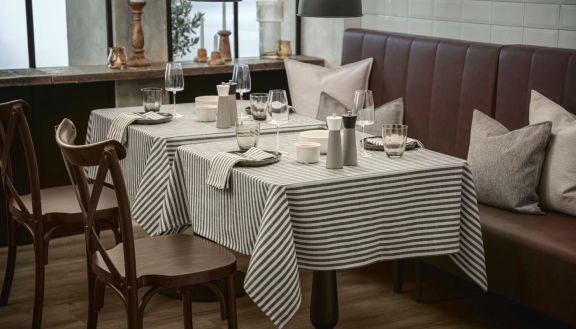
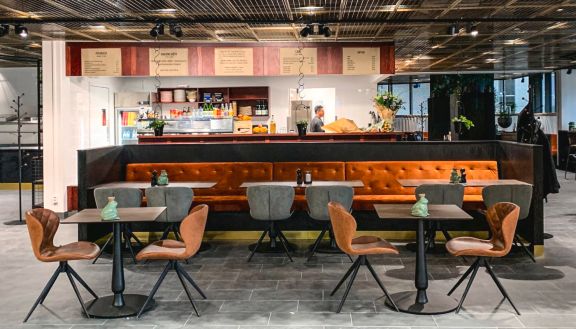
Mid-Century Modern lends restaurants a stylish yet relaxed atmosphere that exudes quality without being aloof. Clean lines, warm wooden materials and carefully chosen colour schemes create a harmonious overall look that guests perceive as well thought-out and inviting. The design style combines timeless aesthetics with functionality – modern and subtly ‘Instagrammable’, without being obtrusive.
Vintage-style table linen
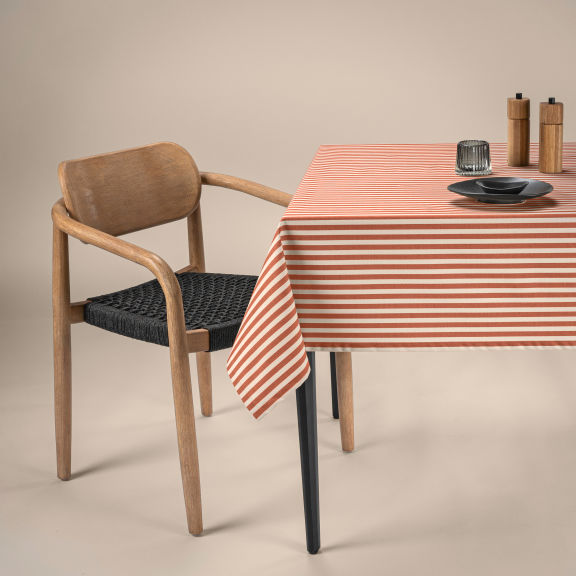
Table linen is a great way to give your restaurant a mid-century modern feel and vintage charm. Opt for geometric patterns and muted earth tones – always matching the crockery, of course. High-quality materials and a pleasant texture emphasise the design aesthetic and create a welcoming atmosphere.
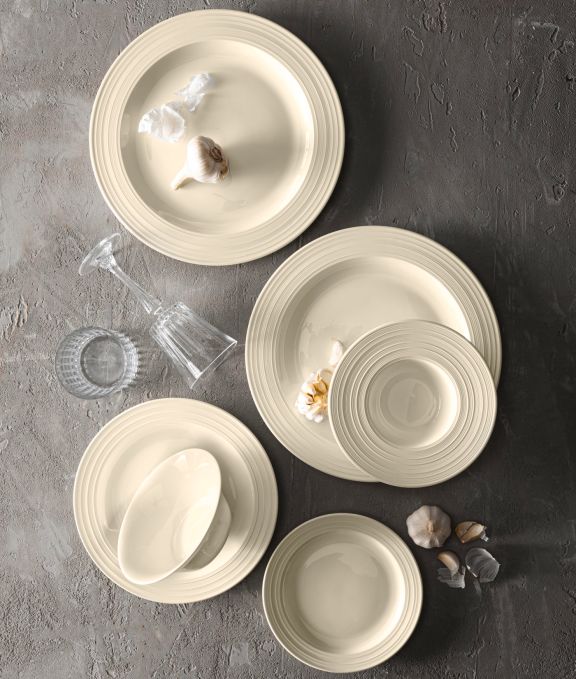
Crockery and cutlery
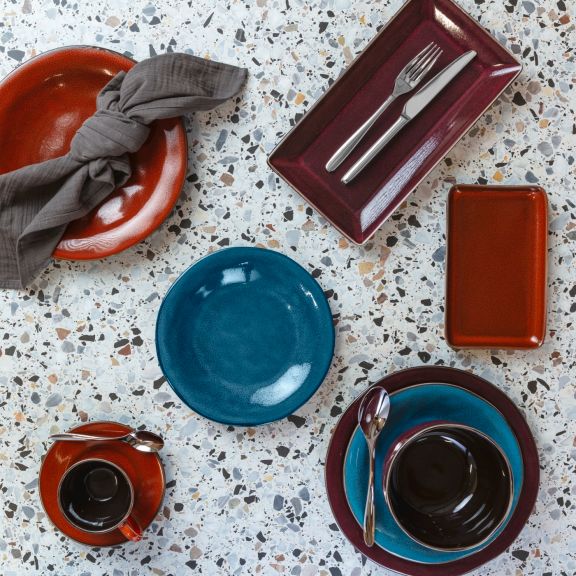
Mid-century modern tableware follows the same principles as the style as a whole: clean, functional, yet full of character. It has a minimalist look without being boring. Typical features include round or gently curved plates, simple cups and bowls, and natural materials such as porcelain, ceramics or stoneware in warm colours.
Mid-Century Modern for hotels
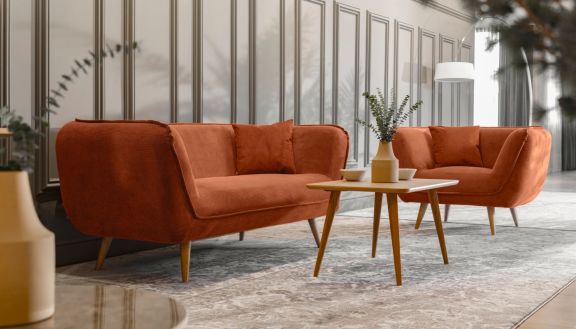
Mid-century modern design in hotels epitomises timeless elegance and clean lines, creating a warm, comfortable atmosphere in both public areas and guest rooms. Elements such as a mid-century-style sideboard and display cabinet, or a matching bedside table in the mid-century look, bring structure to your rooms whilst creating a homely atmosphere – reminiscent of a cosy mid-century living room.
Bringing Mid-Century Modern to life in style
Mid-Century Modern combines timeless design with a cosy atmosphere and practical functionality. Whether in a restaurant, hotel or private home: with clean lines, a warm colour palette, carefully selected materials and matching vintage-style furniture, you can create an interior design concept that looks modern whilst exuding character. Focus on individual Mid-Century elements or design entire rooms in the aesthetic of 20th-century design classics – for an ambience that is stylish, inviting and enduring.